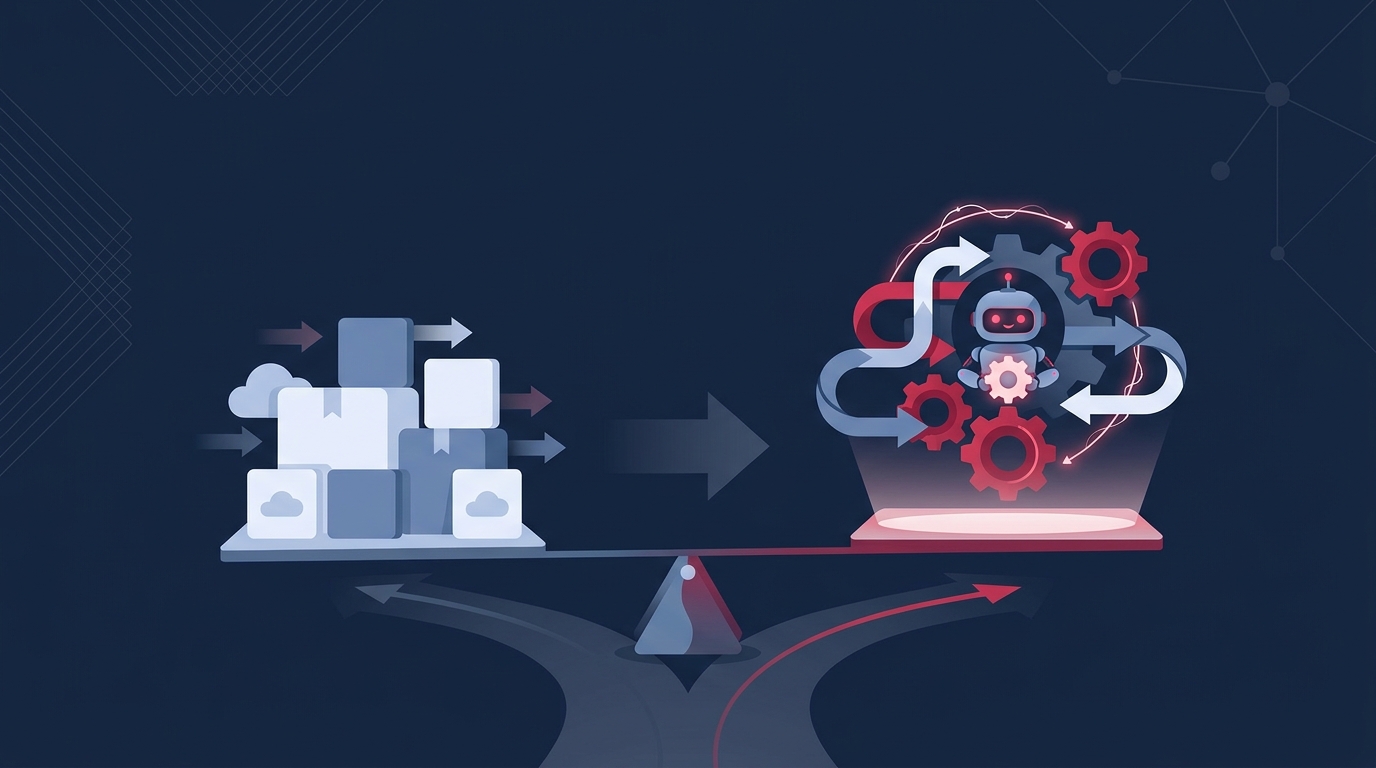
For twenty years, "build vs buy" had a default answer, and the answer was buy. AI just rubbed it out.
The reasoning was sound for a long time. Building software was slow, expensive, and risky; a subscription was fast, predictable, and someone else's problem to maintain. So the smart-money move, again and again, was to buy the SaaS tool and bend your process to fit it. That logic held because of one assumption underneath it — that building was hard. AI-assisted development has quietly knocked that assumption sideways. When the cost and time to build custom software drops sharply, the line where building beats buying moves, and a whole category of things that were "obviously buy" yesterday are worth a second look today.
And here is the part that surprises people: the first thing teams reach to build with that new capability is not a flashy customer-facing app. It is automation — the internal workflows and tools that make their own operation run. This article is about where the build-vs-buy line sits now, why automation sits right at the front of it, and how to decide, soberly, which side of the line any given decision belongs on.
Why "Buy" Was the Default for Twenty Years
To understand what changed, it helps to be honest about why buying won for so long — because those reasons were real, not lazy. Building meant hiring or contracting engineers, waiting months, and carrying the risk that the thing never shipped or shipped wrong. A SaaS subscription converted all of that into a line item: predictable cost, fast onboarding, no maintenance burden, and a vendor on the hook for uptime and updates. For most needs, that trade was unbeatable.
The hidden cost of buying was always the fit. Off-the-shelf software encodes someone else's idea of how your process should work, so you adapt your business to the tool — extra steps, workarounds, data living in a shape that suits the vendor rather than you. For commodity functions nobody cares about (accounting, email), that mismatch is a fine price to pay. But for the workflows that are specific to how your company actually operates, paying a subscription to then contort your process around it was always a quiet tax. You tolerated it because the alternative — building — was too expensive. Take away that expense, and the calculation changes.
What AI Actually Moved (and What It Didn't)
Be precise about the change, because the hype overshoots it. AI lowered the cost and time to build. It did not lower the cost to own, and it did not make buying obsolete. What it did was shift one side of a scale, and that shift is enough to reclassify a meaningful band of decisions from "buy" to "build."
The clearest evidence is in what teams are actually choosing to build. In Retool's 2026 State of Internal Tools survey — 817 respondents — the most common things teams build in-house are automated workflows and internal tools, each at roughly 53%, just ahead of dashboards at about 51%. Read that again: automated workflows are tied for the single most-built category. The work that companies most want to own, now that building is affordable, is the connective automation that runs their operation — not a clone of some customer-facing product, but the internal machinery that a generic SaaS tool could only ever fit approximately.
Source: Retool, 2026 State of Internal Tools report (survey, n=817). Automated workflows and internal tools lead the categories teams build rather than buy.
Why Automation Is the Thing Teams Build First
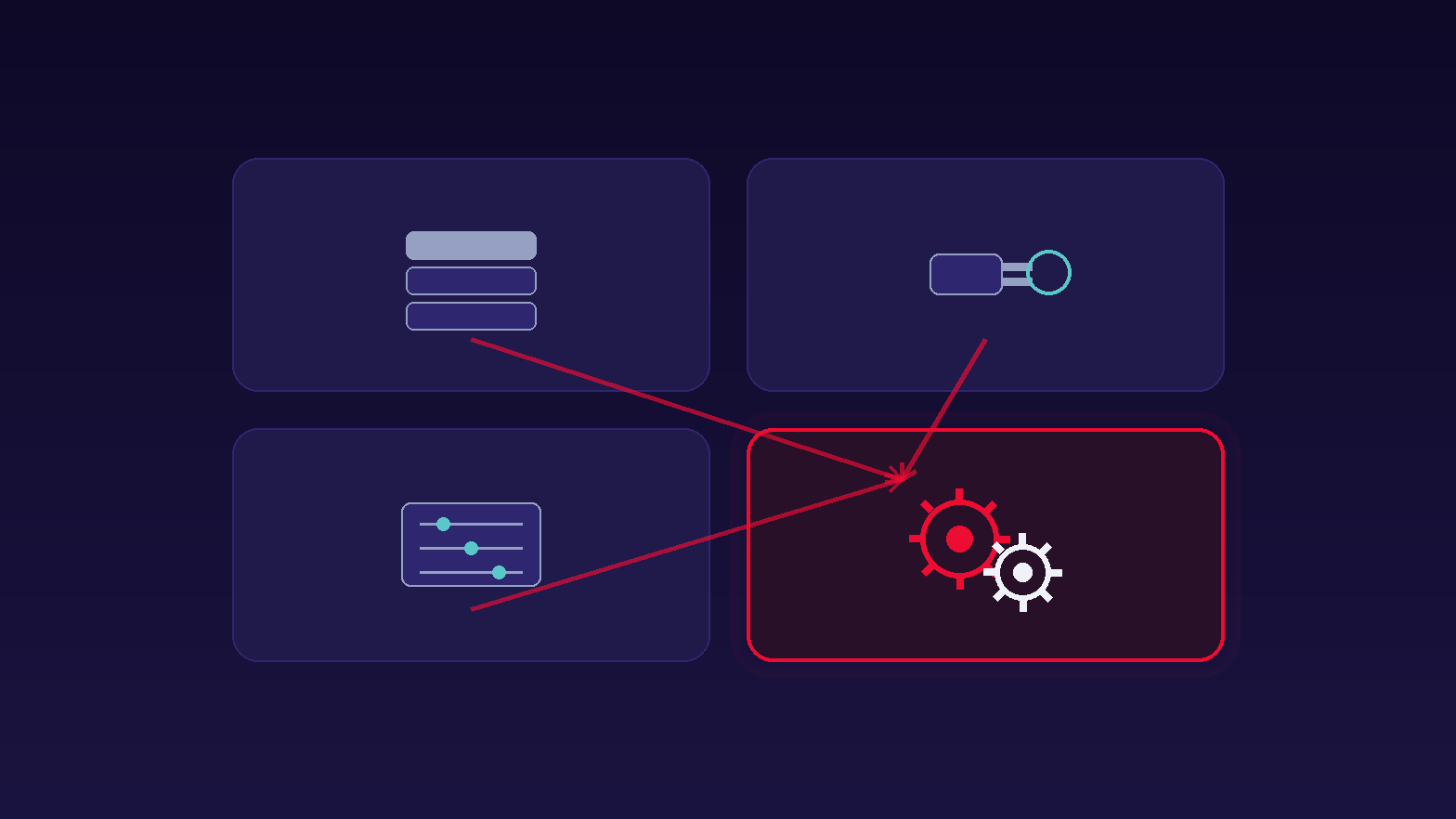
It is no accident that automation sits at the front of the build queue rather than, say, a new mobile app. Three things make workflow automation the natural first thing to own once building gets cheap.
It is the worst fit to buy. Automations connect your specific systems in your specific sequence with your specific rules. A generic SaaS automation tool can approximate that, but you end up shaping your process to its assumptions — exactly the fit-tax described above, and it bites hardest here because workflows are where a company's idiosyncrasies live. A custom build can match the process precisely instead of forcing the process to bend.
It compounds. A bought tool does one vendor-defined job. An automation you own becomes a building block you can extend, chain, and adapt as the business changes. The first workflow you build makes the second one easier, because you now own the plumbing between your systems. Bought tools rarely compound like that — each is an island with an API you negotiate with.
The payoff is immediate and measurable. Automating a real internal workflow returns time the week it ships, and the value is obvious to everyone who used to do that work by hand. That makes automation the easiest place to justify the newly-affordable build — clear before-and-after, fast payback, and a result that fits like it was made for you, because it was.
The Build-vs-Buy Framework, Recalibrated
So how do you actually decide now, with the line in its new position? The old instinct ("buy unless you must build") is out of date, but "build everything" is a trap that just trades subscription bills for a sprawl of software you have to maintain. Here is the recalibrated test we use with clients, decision by decision.
| Lean BUY when… | Lean BUILD when… |
|---|---|
| It's a commodity, not a differentiator (email, accounting, payroll) | It encodes a process specific to how your business actually works |
| The domain is hard and risky to get right (payments, identity, security) | Off-the-shelf tools force you to bend your process to fit them |
| A mature product already fits your workflow well | It's a workflow automation connecting your own systems and rules |
| Subscription cost is lower than lifetime build + maintenance | You want it to compound — extend and adapt it as you grow |
| You'd need to build and maintain rare, undifferentiated plumbing | Owning it gives you data, control, and a fit no vendor can match |
Notice the spine running through both columns: it is total cost of ownership and strategic fit, not "is building possible." Building is almost always possible now — that is precisely why "can we build it?" stopped being the right question. The right question is "should we own this, given what it costs to keep alive and how specific it is to us?" Commodity and genuinely-hard things still point to buy. Process-specific automation, which used to be priced out of reach, now usually points to build. The skill is telling the two apart deliberately instead of defaulting to either.
How to Be in the Winning Minority
As building gets cheaper, two failure modes appear. One camp keeps buying out of habit and quietly pays the fit-tax forever, bending their best processes around generic tools. The other camp over-corrects, builds everything because they can, and drowns in a swamp of half-maintained custom software. The winning minority threads between them with a few deliberate habits.
They decide on total cost of ownership and strategic fit, not on the cost to create version one — because the cheap part is the build, and the expensive part is the decade of owning it. They build the workflows and internal tools that are specific to how they operate, and keep buying the commodity and high-risk capabilities where a vendor's scale genuinely beats them. They engineer their builds to last — with the monitoring, security, and maintainability that turn cheap-to-create software into a durable asset rather than tomorrow's liability. And they bring in real engineering for the builds that matter, because "AI made it easy to start" and "it holds up in production" are very different claims, and the gap between them is exactly where most cheap builds quietly fail.
The line has moved, and it will keep moving in the build direction as the tools improve. The advantage does not go to whoever builds the most or buys the least. It goes to whoever decides, case by case, with clear eyes about ownership cost and fit — and then builds the things worth owning properly. That is the whole game now, and it is very winnable.
Build the Workflows Worth Owning — Properly
Shanti Infosoft is a CMMI Level 5 software engineering firm. We help you make the build-vs-buy call on total cost of ownership, then build the custom automations and internal tools worth owning — engineered to last, with monitoring, security, and full IP and source ownership. You get a named senior team and written fixed-scope estimates.
Frequently Asked Questions
Has the build-vs-buy decision really changed because of AI?
Yes, on the build side of the equation. AI-assisted development sharply lowered the cost and time to build custom software, which shifts the threshold at which building beats buying. Buying still wins for commodity, deeply complex, or compliance-heavy systems, but a whole category of things that used to be "obviously buy" — internal tools and workflow automations — are now realistic to build, especially when off-the-shelf products force you to bend your process to fit them.
What are teams building in-house now instead of buying?
Internal tools and automated workflows lead the list. In Retool's 2026 State of Internal Tools survey of 817 respondents, automated workflows and internal tools were the most common things teams build (each at about 53%), just ahead of dashboards at roughly 51%. These are exactly the categories where a custom build can fit a company's specific process instead of forcing the process to fit a generic SaaS product.
When should you still buy software instead of building it?
Buy when the capability is a commodity that is not a competitive differentiator (email, accounting, payroll), when the domain is genuinely hard and risky to build correctly (payments, identity, security infrastructure), or when a mature product already fits your process well and the total cost of ownership of building and maintaining your own would exceed the subscription. Buying is about not reinventing solved, undifferentiated problems.
Doesn't cheaper AI-assisted building just create more software to maintain?
It can, and that is the real risk of the shift. Lower build cost does not lower the ownership cost — every custom build still needs maintenance, monitoring, and security. The teams that win build deliberately where custom genuinely beats buying, and engineer those builds to last rather than treating cheap generation as a reason to build everything. The decision should still be made on total cost of ownership, not just the cost to create version one.
Is "vibe coding" a SaaS product good enough to replace the real thing?
For a quick internal tool or a well-scoped automation, AI-assisted building can genuinely replace a subscription and fit your process better. But "it works in a demo" and "it's safe to run your business on" are different bars — the second needs proper engineering, security, and maintenance. Use fast AI-assisted builds to validate and to own simple, specific workflows; bring real engineering to anything that handles sensitive data, money, or load.
Written by
Rishabh Jain
AI Consultant & Founder, Shanti Infosoft LLP
Shanti Infosoft is a CMMI Level 5 software engineering firm. We deliver every project with written, fixed-scope estimates, full IP and source-code ownership for the client, and a named team of senior engineers. We specialise in taking AI from prototype to production: 700+ projects delivered across web and mobile development, AI integration, and offshore engineering.
700+ Projects Delivered | CMMI Level 5 | 4.9★ on Clutch | 38,000+ hrs on Upwork