
"The board wants an AI strategy by Q3." If that sentence has landed in your inbox with no problem attached to it, no budget logic, and no use-case behind it — just a mandate to do AI — you're not witnessing strategy. You're witnessing a symptom.
The press has started calling it "AI psychosis" in the C-suite — a wave of executives and boards so gripped by the fear of being left behind that they're mandating AI adoption before anyone has identified a problem worth solving. TechCrunch and others have written about tech leaders caught in this exact spiral in 2026. It's understandable: the pressure is real, the hype is deafening, and "we're investing heavily in AI" is a comfortable thing to tell a board. But it's also the single most reliable way to burn a budget and demoralise a team — and it's worth saying plainly, because the cure is simpler than the diagnosis sounds.
Of AI failures are organizational and leadership-driven, not technical (RAND)
Of agentic AI projects Gartner expects cancelled by 2027
The one reframe that turns an AI mandate into an AI result
The Symptoms, Said Out Loud
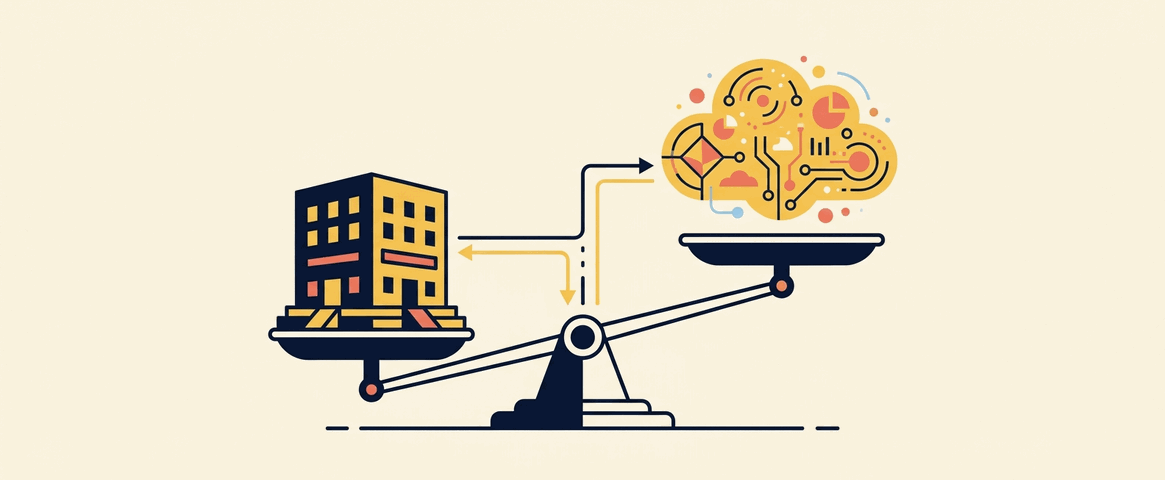
AI psychosis in the C-suite has a recognisable clinical picture. See if any of this sounds familiar from your last leadership offsite.
It starts with the solution in search of a problem: "We need to use AI" becomes the directive, and teams are sent off to find somewhere — anywhere — to apply it. The order is backwards. Healthy technology decisions start with a problem and ask what solves it. This one starts with the solution and hunts for a problem to justify it.
Then comes FOMO as a strategy: the driving force isn't a customer need or a cost to cut, it's the fear that a competitor's press release got there first. Decisions made from fear of missing out are reliably worse than decisions made from understanding what you're trying to achieve.
Add the vanity metric — success defined as "we deployed AI" or "we have an AI strategy," rather than a business outcome. The moment shipping the technology becomes the goal instead of the result, the project has already lost its anchor.
And finally, the timeline with no scope: "AI strategy by Q3," "an agent live this quarter" — a deadline attached to an ambition that was never defined. This is the tell that pressure, not planning, is in the driver's seat.
Why Smart Leaders Catch It
It's tempting to dismiss this as foolishness, but the people falling into it are often sharp, experienced executives — which is exactly why it's worth understanding rather than mocking. Three forces converge.
The hype is genuinely overwhelming. Every conference, every competitor, every board member's LinkedIn feed is saturated with AI transformation stories. It creates a powerful and false sense that everyone else has figured this out and you're behind. Most of those stories are press releases, not P&L results — but in volume, they're persuasive.
The fear is real and personal. No leader wants to be the one who missed the most important technology shift in a generation. That fear is rational. The mistake is letting it drive the order of decisions — acting before understanding, because acting feels safer than thinking.
And "doing AI" is easier to announce than to do well. Mandating an AI initiative is a single sentence in a board meeting. Identifying a real problem, scoping it, and shipping a governed solution is months of unglamorous work. The gap between how easy it is to declare and how hard it is to deliver is exactly where budgets disappear. This is why RAND's finding that roughly 84% of AI failures are organizational and leadership-driven — not technical — rings so true. The technology mostly works. The decision-making around it frequently doesn't.
How to Say No to the Mandate (Without Saying No to AI)
Here's the reframe that defuses all of it, and it's not anti-AI in the slightest. You don't refuse the board's interest in AI — you redirect it from the technology to the outcome. The move is to replace "what AI should we build?" with "what's our most expensive, most repetitive, most error-prone problem — and would AI actually solve it better than the alternatives?"
That single question does the board a genuine favour. It turns a vague mandate into a real strategy. It protects the budget by forcing AI to compete on merit against other ways of solving the same problem. And it produces something you can actually measure and defend — which is the only kind of AI initiative that survives a future budget review.
| Aspect | AI psychosis (mandate-first) | Healthy AI strategy (problem-first) |
|---|---|---|
| Starting point | "We need to use AI" | "Here's our most expensive problem" |
| Driver | Fear of being left behind | A measurable business outcome |
| Definition of success | "We deployed AI" | "We cut X cost / time by Y" |
| Scope | A deadline with no problem | A problem with a clear first task |
| Likely outcome | Cancelled in the next budget review | A defensible win you can build on |
The Conversation That Resets It
If you're the leader holding the mandate, or the operator handed it, here's how to steer the next conversation toward something that will actually work. None of this requires you to be the person who "pushed back on AI" — it makes you the person who made AI pay off.
- Ask the board what business outcome they want — revenue, cost, speed, risk — not what technology they want
- List your three most expensive, repetitive, or error-prone processes and ask which is worth solving first
- Make AI compete: would it genuinely beat a simpler fix, a process change, or off-the-shelf software here?
- Define success as a number tied to the outcome, before any build starts
- Scope the first deliverable to one narrow, shippable task — then prove it
- Name an accountable owner, and agree what "we'll stop if it doesn't work" looks like
Start With the Problem. The Model Comes Last.
AI is one of the most powerful tools available to a business right now — which is precisely why it deserves better than to be deployed out of fear. The leaders who win with AI in 2026 won't be the ones who moved fastest to "do AI." They'll be the ones who kept their heads while everyone around them lost theirs to the hype, started with a real problem, made the technology earn its place, and shipped something they could measure.
That's not a contrarian take. It's just how good decisions have always been made — and it's the cure for the AI psychosis going around. If your board is asking for an AI strategy and you'd rather give them an AI result, start with the problem and let us help you decide, honestly, whether AI is the right answer. Bring us the problem, not the mandate — and see how we approach AI development that starts with outcomes, not announcements.
What "Cured" Looks Like 90 Days Later
It's worth painting the contrast, because the difference between the mandate path and the problem path becomes stark within a single quarter.
Take the board that mandated "an AI strategy by Q3" with no problem attached. Ninety days later, the predictable picture: a team that scrambled to find something to apply AI to, a half-built initiative whose success no one can define, a budget that's been spent without a number to show for it, and a leadership team starting to ask uncomfortable questions. The strategy exists on a slide. The result doesn't. And the project is now a leading candidate for the next round of cuts — not because AI failed, but because it was never pointed at anything.
Now take the board that was redirected to start with the problem. Ninety days later: they picked their most expensive, repetitive process; they confirmed AI genuinely beat the alternatives for it; they scoped a narrow first deliverable with a real metric and an accountable owner; and they have a working version in production cutting that specific cost. It's not a transformation. It's one concrete win — measurable, defensible, and expandable. And because it's real, it earns the credibility and the budget for the next one. That's how an AI program is actually built: not by mandate, but by stacking defensible wins.
The irony worth sitting with is that the problem-first board ends up further ahead on AI than the mandate-first board — despite moving more deliberately. Panic is slow. Clarity compounds.
Frequently Asked Questions
Got an AI Mandate? Bring Us the Problem, Not the Model.
If your board wants an AI strategy, we'll help you give them an AI result — starting with your most expensive, repetitive problem and an honest answer about whether AI is the right fix. No hype, no upsell. Named team, written estimates, CMMI Level 5.